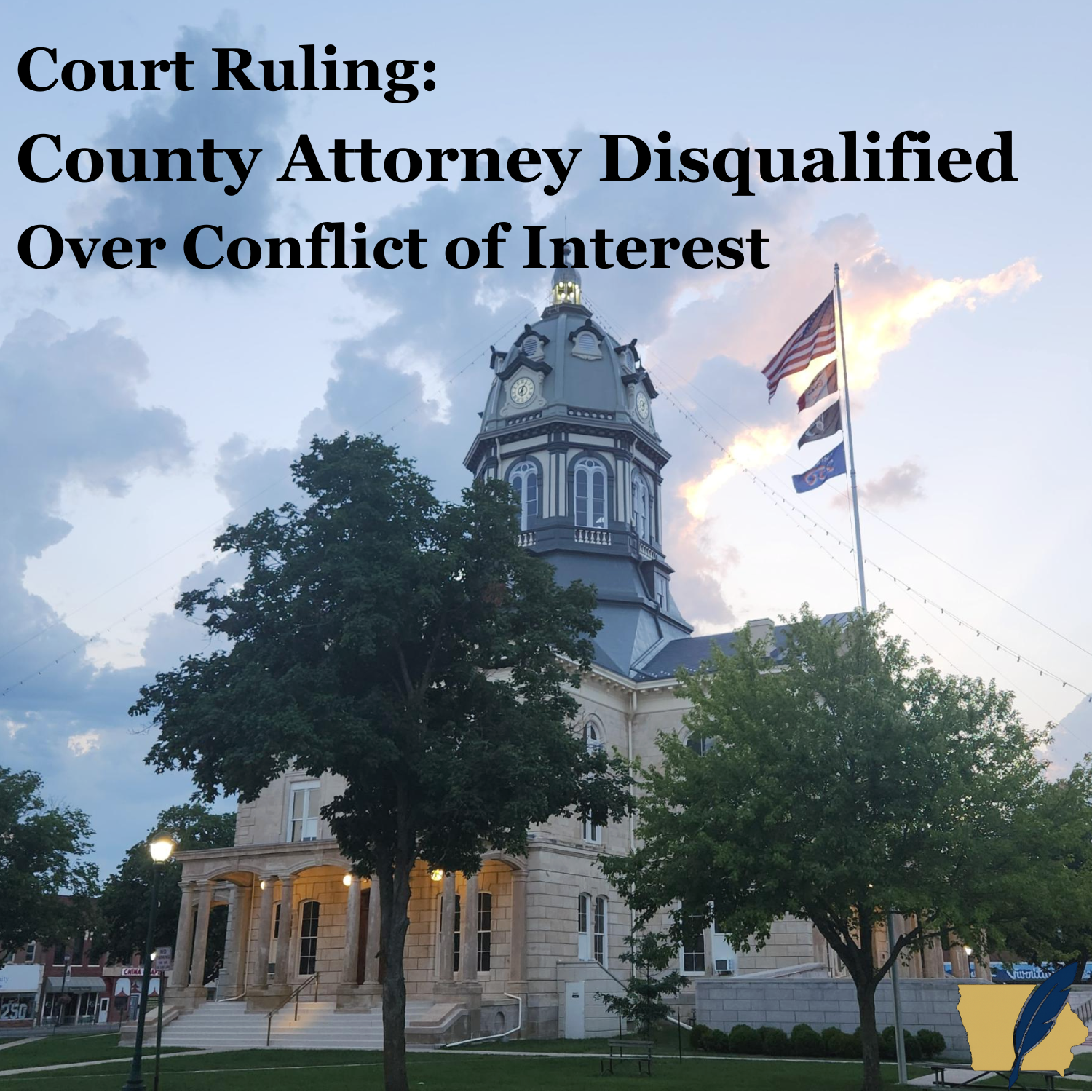
WINTERSET — A Madison County District Court judge has disqualified County Attorney Stephen Swanson from representing County Auditor Michele Brant in her lawsuit against Supervisors Heather Stancil and Jessica Hobbs, ruling that his statutory duties to represent Madison County and its officers created a conflict of interest. The decision requires Brant to obtain new counsel but does not resolve the underlying dispute over the Board of Supervisors’ authority.
Although the ruling concerns who may represent the Auditor in court, the lawsuit centers on a broader legal question: how far the Board of Supervisors’ authority extends when organizing county government, establishing staffing, and approving county budgets.
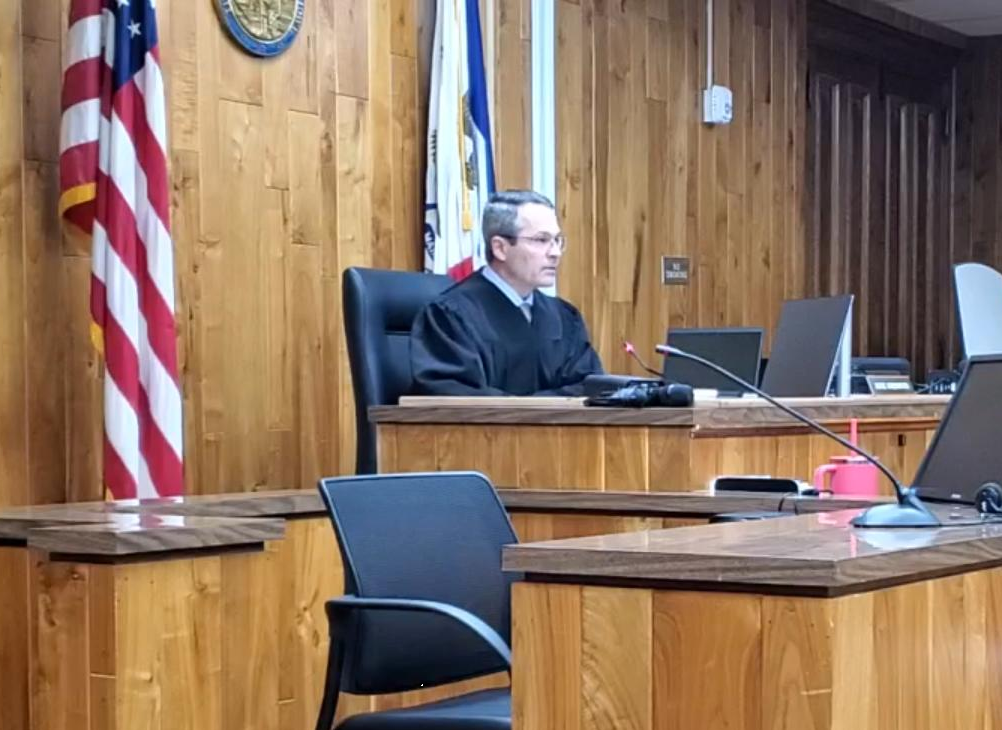
Judge Patrick Greenwood’s August 14, 2026 ruling concluded that Swanson cannot simultaneously fulfill his statutory responsibilities to the county and represent Brant in a lawsuit asking the court to declare actions of two supervisors illegal. The judge ordered Brant to nominate successor counsel by August 24 and ruled that Madison County taxpayers, through the county’s general fund, will pay the “reasonable and necessary” cost of representing her in her official capacity.
Why Swanson Was Disqualified
The lawsuit placed the County Attorney in an unusual position.
Brant sued Stancil and Hobbs in their official capacities as members of the Board of Supervisors, asking the court to invalidate actions approved during the Board’s April 28, 2026 meeting. Swanson filed the lawsuit on Brant’s behalf in his capacity as County Attorney.
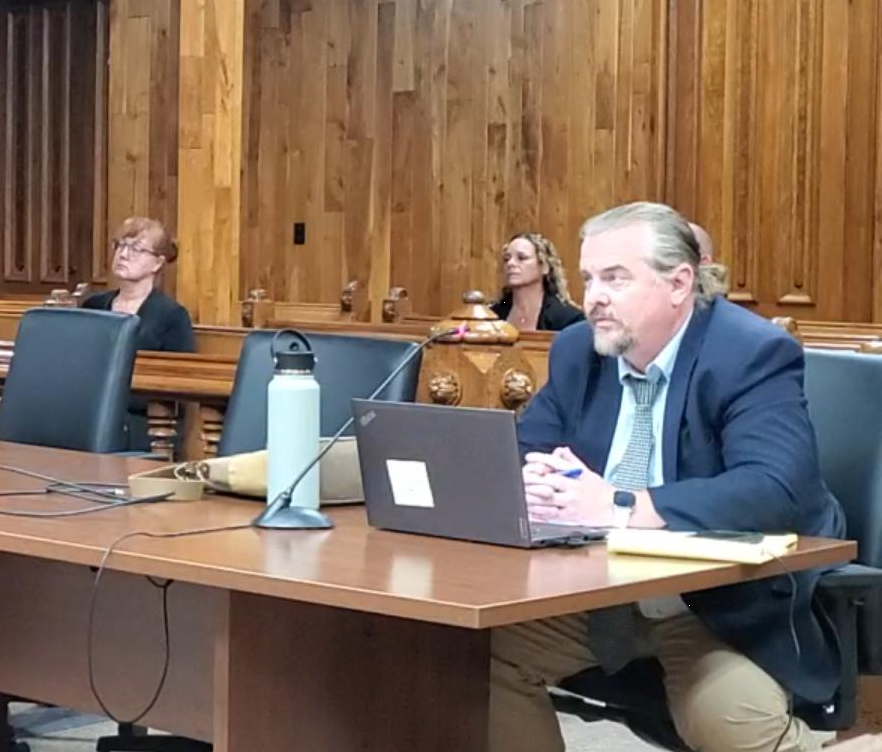
During a July 20 hearing, Judge Patrick Greenwood repeatedly questioned Swanson about whether he believed a concurrent conflict of interest existed and whether he had sought written waivers from either the Board or Brant. Swanson testified that he did not believe a concurrent conflict existed and therefore had not sought waivers.
Judge Greenwood ultimately rejected Swanson’s argument that no concurrent conflict of interest existed. In his written ruling, he concluded that Iowa law requires the County Attorney to represent Madison County and its officers in their official capacities and that Brant’s lawsuit placed Swanson in a position directly adverse to members of the Board of Supervisors. The court found that concurrent conflicts of interest existed and that Swanson could not satisfy the requirements necessary to continue representing Brant.
The conflict issue involved more than the County Attorney’s statutory duties. In reaching its decision, the court also considered sworn evidence presented by the Board that Swanson had participated in privileged attorney-client communications regarding Madison County’s defense of Brant’s civil-rights complaints. Madison County’s outside counsel in those civil-rights cases, Melissa Schilling, submitted a declaration stating that she had numerous attorney-client communications with Swanson regarding the County’s defense, including discussions involving privileged information and litigation strategy. Schilling further stated that, in her opinion, the information Swanson obtained could be used to the County’s disadvantage in Brant’s lawsuit against the Board.
The court also concluded that requiring Brant to personally fund legal representation while acting in her official capacity would be inconsistent with Iowa law. Instead, it ordered that new counsel be appointed and paid from the county’s general fund.
What the Lawsuit Is About
The lawsuit centers on the scope of the Board of Supervisors’ authority over county operations.
Brant contends that actions approved during the Board’s April 28 meeting unlawfully reorganized or restructured the Auditor’s Office and asks the court to set those actions aside. She also alleges the Board acted in retaliation for civil-rights complaints she filed against members of the Board.
The Board disputes those claims.
In a June 26 motion to dismiss, the supervisors argue that the challenged actions were legislative decisions involving county staffing, budgeting, and operations. They contend those decisions cannot be challenged through a writ of certiorari and further argue that, to the extent Brant alleges retaliation for filing civil-rights complaints, she must first pursue the administrative process established under the Iowa Civil Rights Act.
The court has not yet ruled on those arguments.
Why Buildings and Grounds Became the Focal Point
Much of the dispute involves the county’s Buildings and Grounds Maintenance Department.
Before October 2025, the department reported directly to the Board of Supervisors. On October 14, 2025, however, the Board adopted a resolution assigning the Auditor responsibility for the department’s day-to-day operations and designating the Auditor as custodian of the courthouse annex. The same resolution expressly stated that the department and county buildings remained subject to the Board’s continuing oversight and policy direction.
Buildings and Grounds also remained a separate county department with its own budget, distinct from the Auditor’s Office.
When the Board approved the FY2027 budget on April 28, it included changes affecting the department, including a proposal to outsource building maintenance, create a Building and Operations Manager position, and return the department to direct Board oversight for operational and administrative purposes.
The Board says those changes were intended to reduce government costs and improve county operations. Brant contends they unlawfully interfered with the Auditor’s authority and were connected to the broader disputes between her office and the Board.
The court will ultimately determine whether the Board acted within its legal authority and whether Brant’s claims have merit.
Why the Case Matters
Beyond the dispute between elected officials, the outcome of the case could affect how county boards and other elected officials exercise their authority under Iowa law.
The court must determine whether the Board’s April 28 actions were lawful, whether they constituted legislative decisions within the Board’s authority, and whether Brant’s claims may proceed in the form she has filed them.
Until then, the stay remains in place, preventing implementation of the challenged April 28 changes.
The litigation has also generated additional legal costs for Madison County. The Board retained outside counsel to defend the lawsuit, and Judge Greenwood’s ruling now requires the appointment of separate counsel to represent Brant in her official capacity, with those costs paid by taxpayers from the county’s general fund.
What Happens Next
Judge Greenwood’s ruling resolves only the question of legal representation.
It does not determine whether the Board exceeded its authority, whether the FY2027 budget actions were lawful, or whether Brant’s claims ultimately have legal merit.
Those questions remain pending before the court.
For now, Brant must proceed with new counsel while the underlying dispute over the Board’s authority continues.
Primary Source Documents:
May 28: Petition for Writ of Certiorari and Temporary Injunction
July 20: Hearing (Video)
June 26: Defendants’ Return of Writ
June 26: Motion to Dismiss and Dissolve Stay
July 31: Swanson’s Resistance to Motion to Disqualify
August 6: Defendants’ Reply in Support of Motion to Disqualify
Declaration of Heather Stancil
Declaration of Melissa Schilling
August 14: Judge Greenwood’s Order Disqualifying County Attorney
The Madison Report’s Document Library includes the above source documents as well as documents related to past articles.