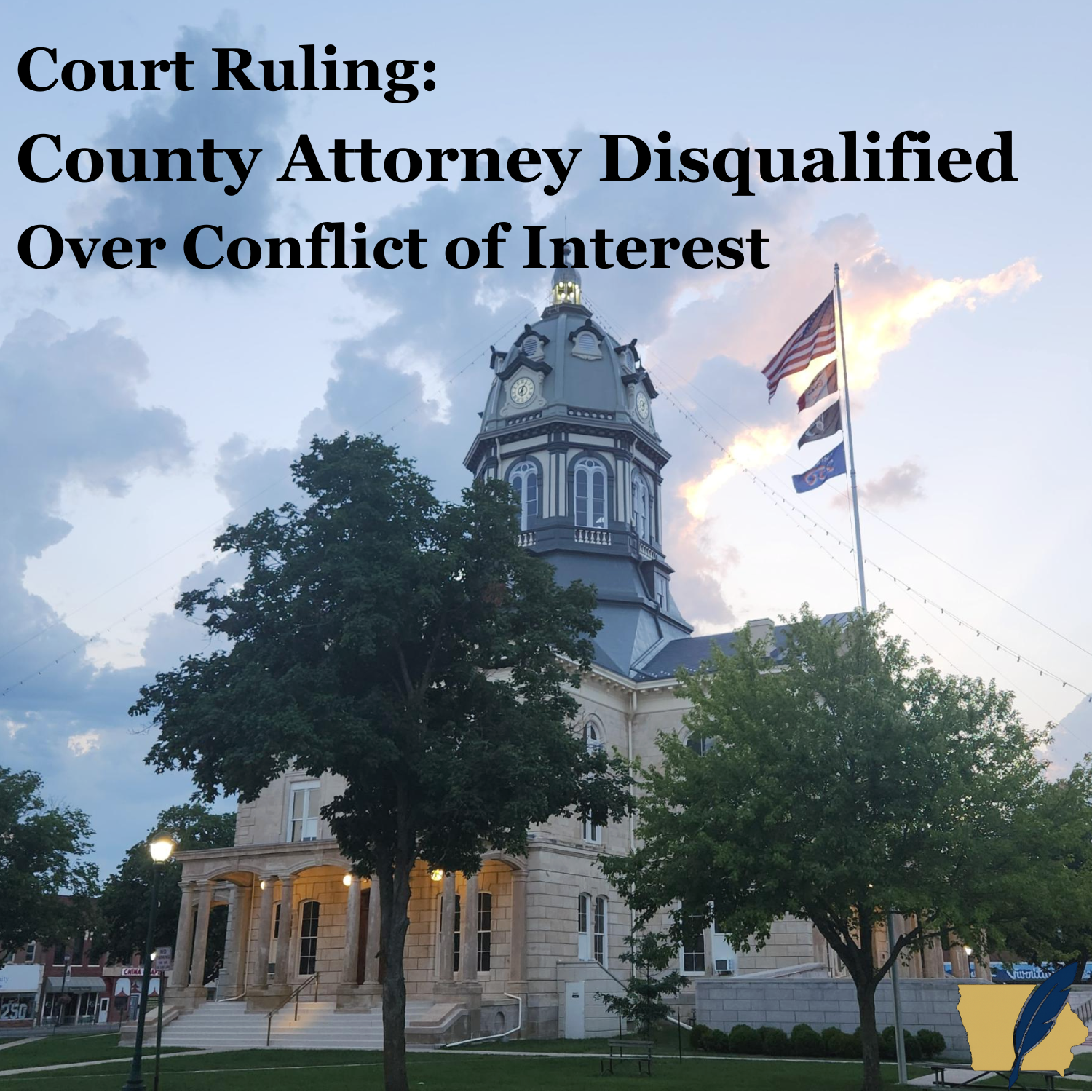
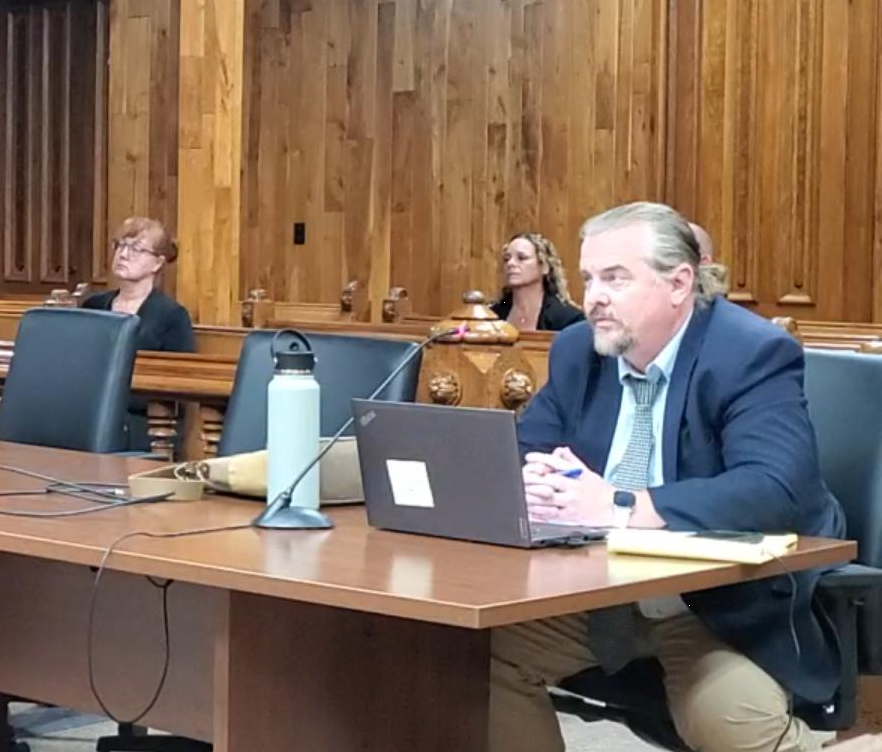
WINTERSET — Madison County Attorney Stephen Swanson has been disqualified from representing County Auditor Michele Brant in a second lawsuit involving the Madison County Board of Supervisors.
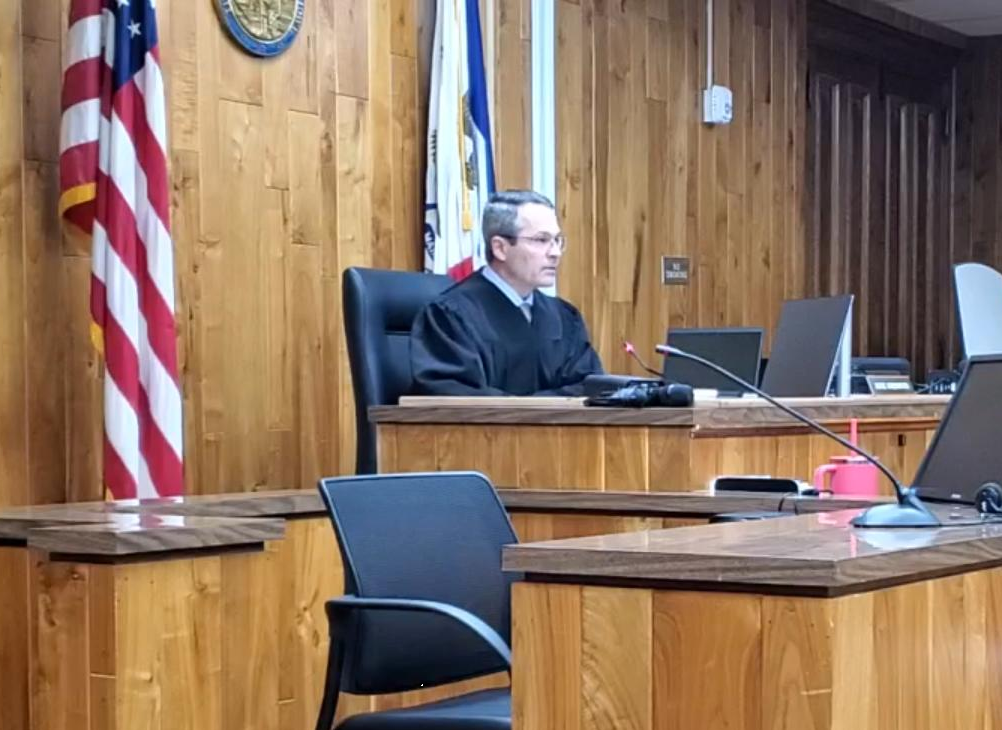
Judge Patrick Greenwood issued the ruling September 1, finding that Swanson’s responsibilities as county attorney create a conflict of interest that prevents him from representing Brant against the Board.
The ruling comes just weeks after Greenwood disqualified Swanson from representing Brant in her separate lawsuit against Supervisors Heather Stancil and Jessica Hobbs.
This time, the circumstances are reversed: the Madison County Board of Supervisors is suing Brant, in her official capacity as county auditor, after she declined to pay claims for legal services provided to the Board by outside counsel, Belin McCormick.
Judge rejects Swanson’s conflict argument again
The Board asked Greenwood to disqualify Swanson, arguing that the county attorney cannot represent one county official in litigation against another while retaining statutory responsibilities to the county and its Board of Supervisors.
Swanson opposed the motion at an August 24 hearing, arguing that there was no actual conflict because the Board had retained outside counsel and he had not represented the Board in this particular lawsuit. His written resistance also argued that the Board’s decision to hire outside counsel eliminated any conflict.
Greenwood rejected Swanson’s argument. The judge noted that Swanson is required by statute to represent the county and its officers in their official capacities. In this case, the Board itself is the plaintiff, while Swanson was attempting to represent Brant, the defendant.
Greenwood also pointed to Swanson’s testimony at the August 24 hearing regarding how he would handle information relevant to the Board while representing Brant. The judge concluded that Swanson’s obligations to Brant could materially limit his ability to fulfill his statutory duties to the Board and the county.
Judge cites previous subpoena dispute
Greenwood also pointed to a previous dispute involving Swanson and the Board’s outside counsel.
In October 2025, Swanson subpoenaed the Board’s attorney-client files maintained by its outside counsel. The district court quashed the subpoena after concluding it would improperly invade the Board’s attorney-client privilege. Swanson later asked the court to reconsider, but that request was denied. In denying reconsideration, the court characterized the subpoena as “grossly overly broad” and said its issuance would be “wholly inappropriate.” [September 1 ruling]
Greenwood then explained why he viewed the subpoena dispute as evidence that the conflict was not merely hypothetical:
“The division of Attorney Swanson’s loyalties isn’t just hypothetical. Believing that the board (at least in the majority) had isolated him, Attorney Swanson used the power of subpoena to attempt to invade the board’s attorney-client files maintained by outside counsel. Even though the district court quashed the subpoena in order to protect the board’s privileged communications, Attorney Swanson asked the court to reconsider the ruling.”
Greenwood concluded:
“To put it succinctly, County Attorney Swanson will either be loyal to Brant, or he will be loyal to the Madison County Board of Supervisors. He cannot be loyal to both under these circumstances. As a lawyer and member of the legal profession, Stephen Swanson is an officer of the legal system having special responsibility for the quality of justice. His continued representation of Brant (in this action) and the board would erode the public’s trust in the bar and in the integrity of the court system. Disqualification is required to preserve and to protect public confidence in the court system. County Attorney Swanson must withdraw from representing Brant (nor can he propose representing Madison County or its board in this case).”
Taxpayers will initially pay for Brant’s new attorney
Greenwood ordered Brant to nominate successor counsel by September 14.
The judge ruled that the reasonable and necessary cost of representing Brant in her official capacity as county auditor will initially be paid from Madison County’s general fund. That means Madison County taxpayers will initially bear the cost of her replacement counsel.
The Board had argued that Brant should personally bear the costs associated with the litigation. Greenwood did not resolve that issue in the September 1 ruling.
Instead, the judge reserved the question of whether the costs of the action — including the Board’s outside-counsel fees — should ultimately be assessed against Brant personally.
What happens next
The September 1 ruling resolves who may represent Brant in this lawsuit, but it does not resolve the underlying dispute over whether she must pay the claims submitted by the Board’s outside counsel.
For now, Brant must obtain new counsel, and the county’s general fund will initially cover the reasonable and necessary cost of that representation in her official capacity.
The ruling marks the second time in less than three weeks that Judge Greenwood has disqualified Swanson from representing Brant in litigation involving the Board of Supervisors.
The underlying legal disputes remain unresolved.
Documents and Sources
- June 19, 2026 — Petition for Writ of Mandamus and Request for Injunctive Relief
- August 24, 2026 — Hearing Video
- August 26, 2026 — Brief in Resistance to Motion to Disqualify
- August 28, 2026 — Reply in Support of Motion to Disqualify
- September 1, 2026 — Judge Greenwood’s Ruling on Motion to Disqualify