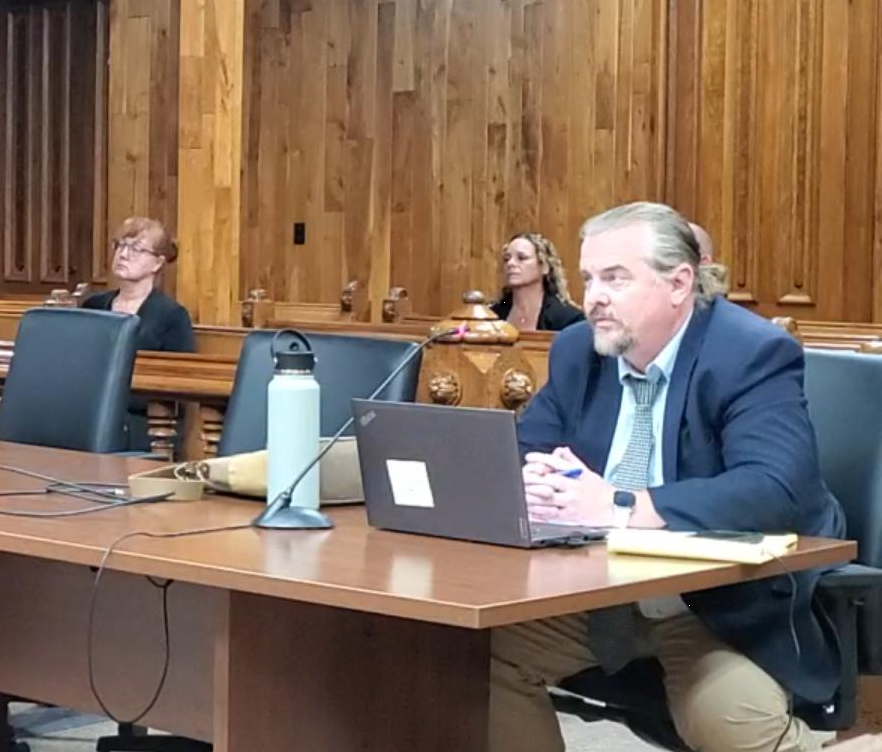
In local government, the phrase “unbiased news” carries particular weight. Whether the subject is a zoning dispute, a school board decision, or a county lawsuit, residents want to believe they are reading a neutral account. Yet the uncomfortable reality is that perfectly unbiased local news—completely free from perspective or emphasis—is extremely difficult to achieve.
Each story about a school board, city council or county board of supervisors meeting is shaped by choices. Which agenda items are covered? Whose quotes are included? How much background context is provided? Is a decision framed as routine governance or political controversy? These decisions are often structural and practical, not ideological—yet they shape how the public understands its own government.
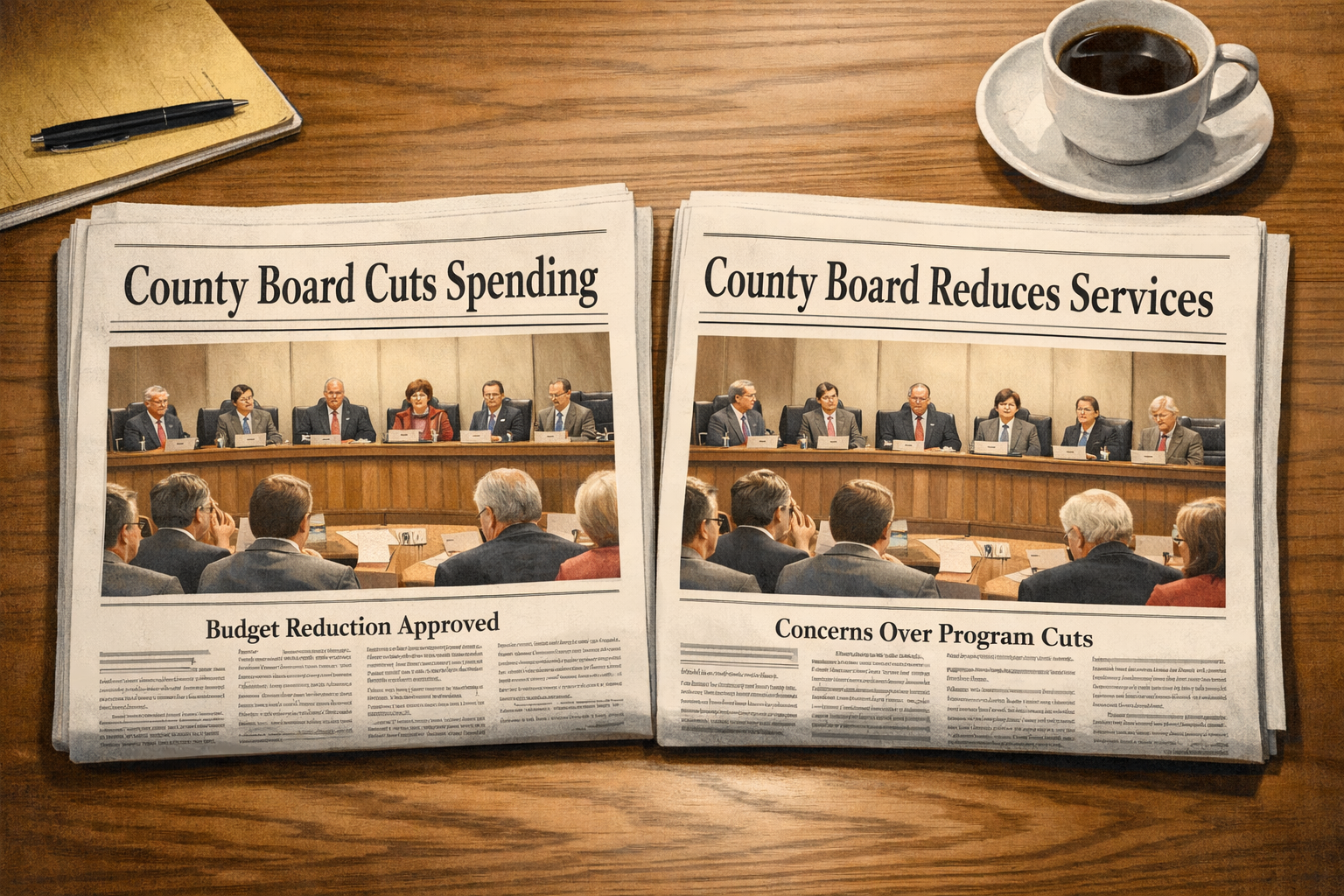
Consider a county budget vote. One article might focus on fiscal restraint and responsible stewardship of taxpayer dollars. Another might highlight the potential impact on services or employees. Both accounts may be factually correct, yet the emphasis and framing can lead readers to very different impressions of the same decision.
Local newsrooms are especially constrained. Editors must decide whether to prioritize a budget amendment, a personnel dispute, or a citizen complaint. These choices reflect human judgment, institutional norms, and practical limitations.
Even the most conscientious local journalist cannot escape perspective entirely. A reporter unfamiliar with public finance will frame a budget issue differently than one trained in public administration. A local paper embedded in a small community may also be cautious about alienating advertisers, subscribers or members of the community. Social relationships, local history, community expectations, and the outlet’s values all influence coverage in subtle ways.
A deeper layer often overlooked is that what readers call “bias” is frequently a matter of alignment, not distortion. When a story mirrors a reader’s beliefs, it tends to feel objective. When it challenges those beliefs, it may feel biased. A taxpayer focused on fiscal restraint may see a cautious budget article as responsible journalism, while a resident focused on services may view the same piece as biased and not addressing their concerns. The article itself may remain factual—the perceived bias arises from the reader’s perspective.
That said, not all distortions are structural or accidental. Some reporting is intentionally slanted, and social media commentary often spreads falsehoods or exaggerations, creating the impression that the news is biased even when the underlying coverage is accurate. Citizens must learn to distinguish between unavoidable framing, responsible journalism, and deliberate misinformation.
In many cases, perceived bias is simply the distance between the newsroom’s framing and the reader’s worldview. No single article will feel neutral to everyone, and an account that tries to satisfy every perspective would likely feel incomplete to all sides.
For citizens, the implication is practical. No single article, outlet, or social media thread provides the full picture of local governance. Understanding what your city or county is doing often requires reading agendas, attending meetings, comparing coverage, and recognizing how narrative framing works. Recognizing these limits does not weaken trust; it can strengthen it.
Perfect neutrality may be an ideal rather than a constant reality—but that does not mean journalists are untrustworthy. Every report is filtered through human judgment and practical constraints.
It is also worth noting that relatively few news organizations describe themselves as “unbiased.” Many, including The Madison Report, avoid the term altogether, recognizing how difficult it is to meet such a standard. Like every outlet, we bring our own perspectives and priorities to the stories we cover, which some readers will inevitably interpret as bias. Our approach will not appeal to everyone, and we will not cover the same stories as other news organizations. At the same time, we recognize that other outlets often have the resources to report on matters we cannot, and their work contributes to the broader understanding of local events.
Accountable local journalism—and citizens willing to engage critically with it—is the real safeguard of public decision-making. Understanding these limits empowers communities to stay informed, rather than misled by the illusion of perfect neutrality.