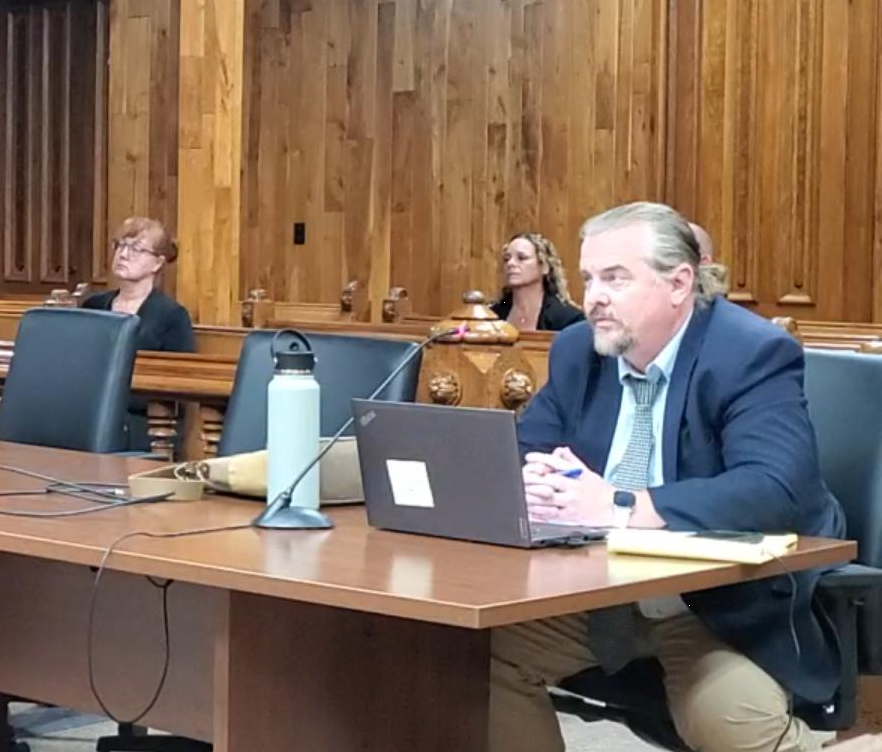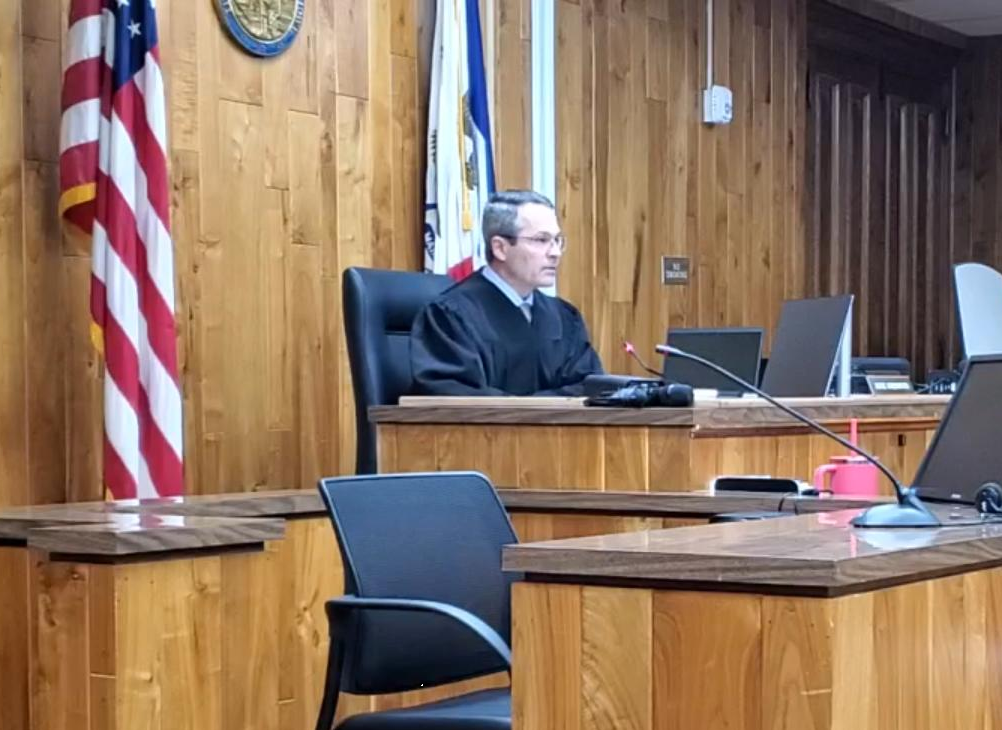
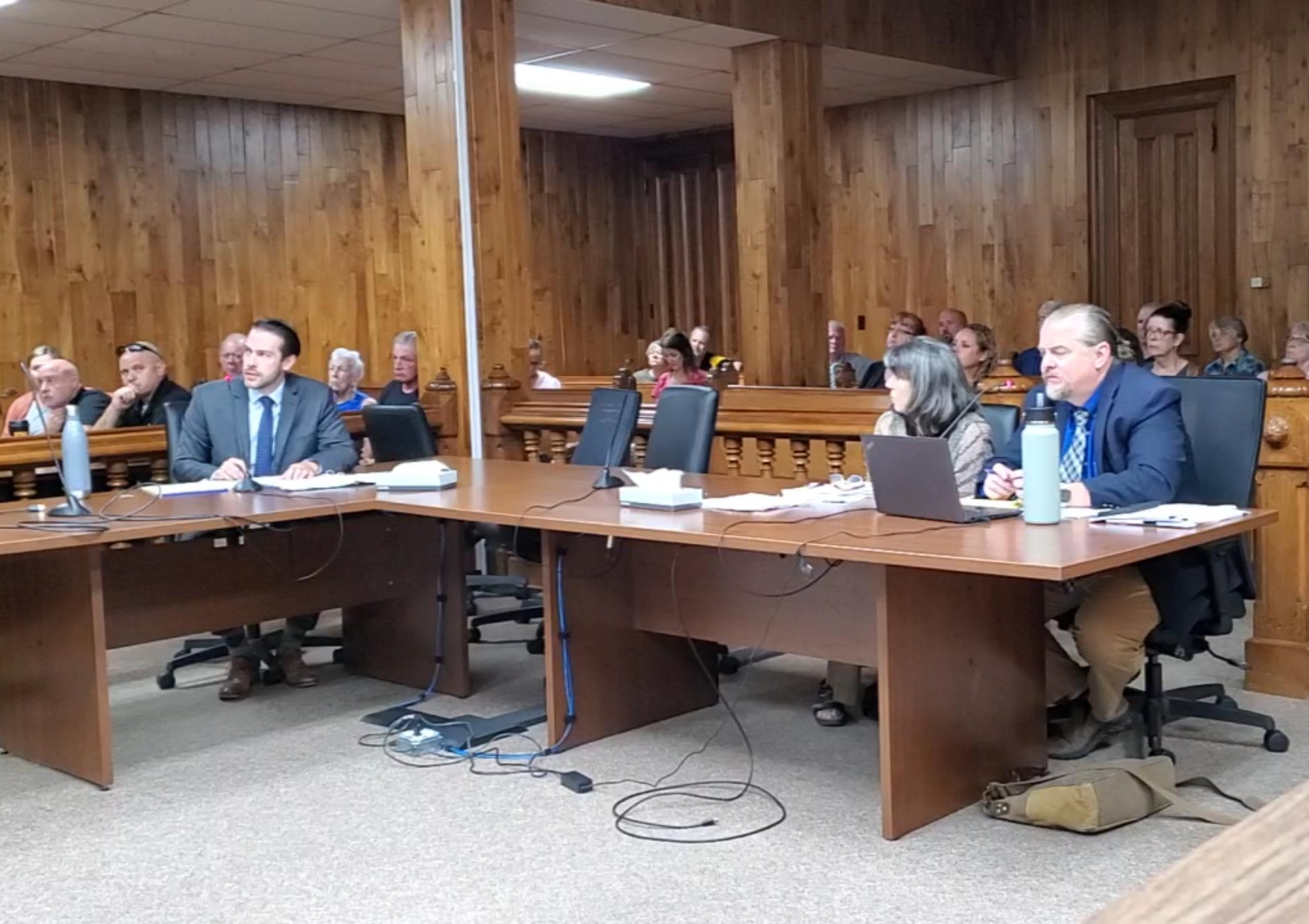
Iowa District Court Judge Patrick W. Greenwood heard arguments Monday in a lawsuit challenging the Madison County Board of Supervisors’ decision to outsource county custodial services. Although three motions were scheduled for the hearing, proceedings focused exclusively on whether County Attorney Stephen Swanson can continue representing Auditor Michele Brant because Greenwood determined that issue had to be resolved before the court could consider the remaining motions.
The Board voted in late March to outsource county custodial services effective June 1. A few days prior to the scheduled start date of the custodial services company, Brant filed suit seeking an injunction to prevent the decision from taking effect.
The Board has asked the court to disqualify Swanson from representing Brant, arguing that, as county attorney, he represents the county and its officials and therefore has a non-waivable conflict of interest.
Greenwood described the matter as a “unique scenario” because the county attorney is representing one county official in litigation against other county officials. He questioned Swanson about whether he had sought conflict waivers from either Brant or the Board of Supervisors. Swanson acknowledged that he had not sought waivers from either party, saying he did not believe they were necessary. He also testified that while the Board has relied primarily on outside counsel since August 2025, he still answers questions for the Board when asked and would represent it if requested.
Attorney Michael Boal, representing the Board of Supervisors, argued that the county attorney’s client is the county itself and that Iowa Code 331 and the Iowa Rules of Professional Conduct prohibit him from representing one county official in litigation against other county officials. Boal argued that the conflict is not waivable and that the Board’s decision to retain outside counsel does not eliminate Swanson’s duty of loyalty to the Board. He also told the court that without further testimony he could not say whether Swanson possessed information from prior representation of the Board that could affect the case.
Swanson argued that the situation is unusual because the Board has repeatedly asserted conflicts with his office over the past year and has largely excluded him from litigation matters. He contended that requiring outside counsel whenever county officials sue the Board could make it difficult to challenge Board actions because the Board controls funding for outside legal representation.
The hearing also addressed what would happen if the court disqualifies Swanson. Greenwood questioned both attorneys about how substitute counsel would be appointed for Brant and how that representation would be funded. Boal argued that because the Board did not authorize Brant’s lawsuit, public funds could not be used to pay outside counsel. Swanson responded that Iowa law does not clearly address how such representation would be funded under those circumstances.
Greenwood did not rule from the bench. Instead, he ordered additional briefing, with Brant’s brief due by noon on July 30 and the Board’s reply due by noon on Aug. 6. After resolving the representation issue, the court will be able to consider the remaining motions in the case.
Editing to Add: Previous article by The Madison Report from May 30, 2026.